
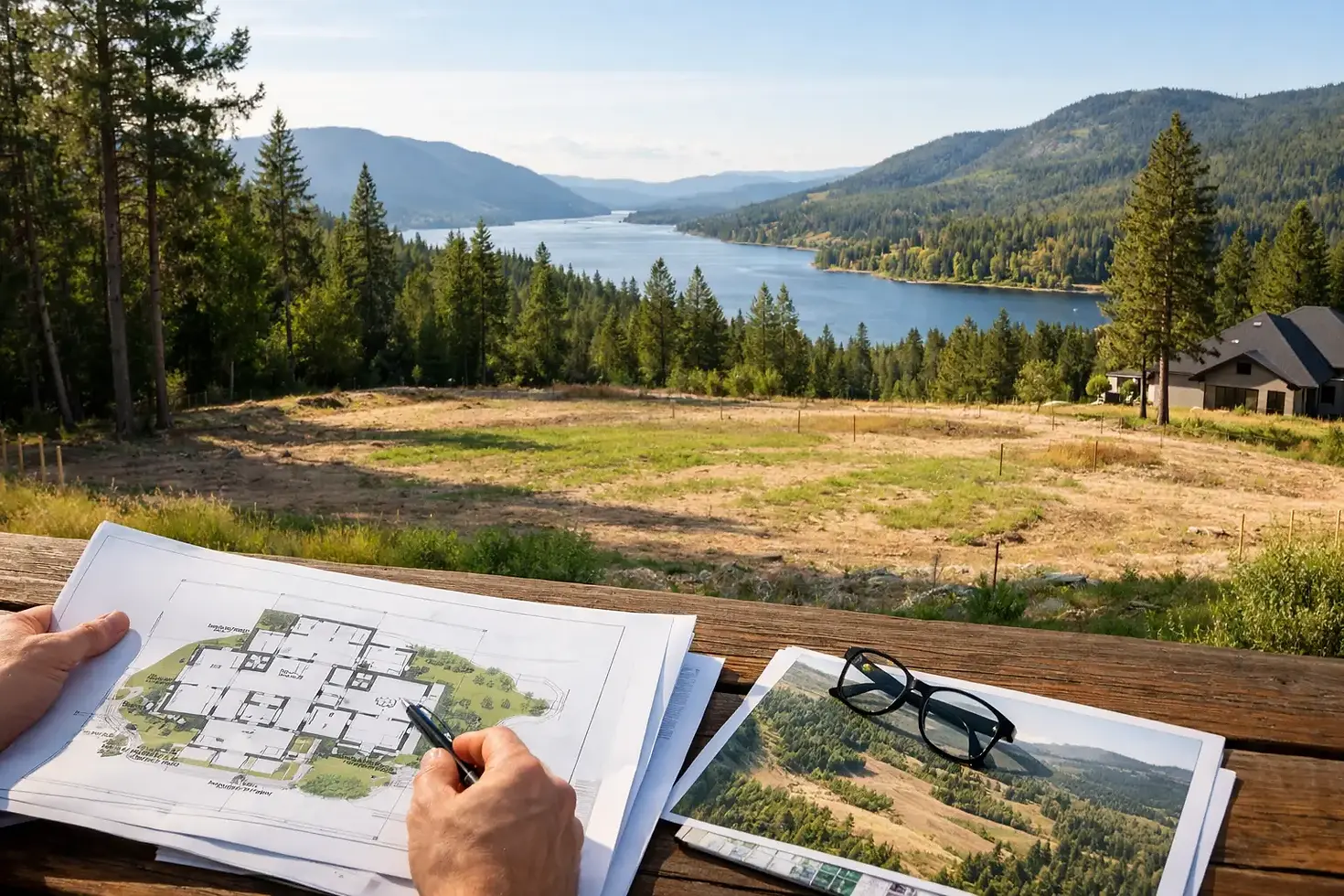
How to Choose a House Lot for North Idaho
A beautiful view can make a property feel like the right choice in five minutes. Building on that same property can reveal years of added cost, difficult access, water problems, and compromises to the home you had in mind. Knowing how to choose a house lot means looking beyond the view, the acreage, and the listing price to understand how the land will support daily life and a durable home.
In North Idaho, the best lots are not always the flattest or the most polished. A sloped parcel may offer privacy, sunlight, and a stronger architectural opportunity. A wooded lot may provide a setting that feels established from day one. The key is understanding what the property asks of the build before you commit to it.
How to Choose a House Lot: Start With Buildability
Buildability is the practical question behind every promising parcel: Can the home, driveway, utilities, drainage, and outdoor spaces fit the land without turning the project into an avoidable excavation or engineering problem?
Start by identifying the likely building area, not just the property boundaries. Setbacks, easements, wetlands, steep slopes, utility corridors, and septic requirements can reduce the usable portion of a lot considerably. On a five-acre property, the actual area available for a home, garage, driveway, and drainfield may be much smaller than expected.
Ask where a home could sit while still leaving room for what matters to your household. That may include a shop, guest quarters, garden, patio, future addition, boat or RV storage, or a practical turnaround for visitors and service vehicles. It is far easier to plan for these needs before construction than to discover later that the home was placed in the only workable area.
A preliminary site walk with a builder who understands local excavation and construction conditions can bring useful clarity early. Existing contours, exposed rock, mature trees, low areas, and neighboring development often tell a more complete story than a listing description.
Look Closely at Access and the Driveway
A driveway is not simply a path from the road to the garage. In North Idaho, it must work through snow, ice, spring runoff, deliveries, emergency access, and the regular traffic of family life. Long, steep, narrow, or sharply curved driveways can be expensive to build and demanding to maintain.
Consider where the driveway will meet the public or private road. Sight distance matters, especially on rural roads with changing grades or limited visibility. So does the approach during winter. A driveway that faces north, runs through dense shade, or has a steep final climb can hold ice long after other areas have thawed.
Construction access deserves equal attention. Concrete trucks, lumber deliveries, excavation equipment, and cranes need a safe route to the building site. If access is difficult, a builder may need to sequence work differently, use smaller equipment, improve the road, or allow more time for deliveries. Those realities do not necessarily rule out a lot, but they should be understood in the purchase decision rather than treated as a surprise after plans are complete.
Follow the Water Before It Becomes a Problem
Water is one of the most important factors in selecting a lot. North Idaho properties can experience heavy rain, fast spring snowmelt, high groundwater, and runoff from uphill parcels. A home needs to work with those conditions through thoughtful grading, drainage routes, foundation design, and properly placed hardscape.
Walk the lot after rain if possible. Look for standing water, soft ground, visible drainage channels, wetland vegetation, saturated ditches, and evidence that runoff crosses the property. Notice the land above the proposed home site as well. Water does not respect property lines, and uphill runoff can influence where a driveway, foundation, or patio should be located.
A gentle slope away from the building area is often beneficial because it gives water a natural path away from the foundation. A perfectly flat lot can require more careful drainage planning, while a steep lot may need retaining, controlled drainage, and specialized foundation solutions. Neither condition is automatically bad. The concern is choosing a site without accounting for the work needed to manage it well.
Tree cover also affects drainage and snow conditions. Mature trees can provide privacy and shelter, but they may shade roofs and driveways, limit winter sun, complicate clearing, or sit too close to a future foundation. Preserve the trees that add value to the home site, while allowing enough room for construction, defensible space, and long-term maintenance.
Verify Utilities, Water, and Septic Early
Do not assume that power at the road means economical power at the house. The distance to the building site, the need for poles or trenching, transformer requirements, and electrical service capacity can all affect cost and timing. The same is true for internet, phone, and propane access, which may be especially relevant on rural or heavily wooded parcels.
For properties without community water and sewer, well and septic feasibility should be a priority before closing. A well may require drilling to a meaningful depth, and water quality or production can vary by area. Septic suitability depends on soil conditions, lot layout, setbacks, slopes, and the location of the well and proposed home.
A septic evaluation is more than a box to check. The approved drainfield location can shape the entire site plan. It may determine where the house can sit, which direction the driveway can run, and whether a future shop or addition remains possible. If a parcel has an existing septic approval, confirm its age, scope, and whether it fits the home you intend to build.
Let the Lot Inform the Home Design
The strongest custom homes do not force a standard plan onto a piece of land. They respond to the site. Before falling in love with a floor plan, consider how the home will face, where the garage belongs, and which rooms deserve the best light and views.
Southern and western exposure can bring welcome natural light and winter warmth, but it can also create summer heat in large glass areas. Northern exposure may preserve a view or create a quieter entry, yet it can leave exterior surfaces colder and slower to dry. A well-designed home balances these factors with roof overhangs, window placement, insulation, and practical outdoor living areas.
Snow management should shape the plan as well. Roof valleys, entrances, decks, mechanical equipment, and walkways need to be positioned with snow shedding and snow removal in mind. In mountain conditions, a roofline that looks appealing on paper can create concentrated snow loads or hazardous drop zones if it is not properly considered.
Think about everyday use, not only the arrival view. Where will groceries come in? Can guests find the front door in winter? Is there room to turn a trailer around? Will outdoor spaces be usable during the hours you are most likely to enjoy them? A lot that supports these details will feel more comfortable long after the first impression has faded.
Check Restrictions and Future Change
Review the recorded plat, covenants, homeowner association rules, and local zoning requirements before making assumptions about the property. Restrictions may affect building size, exterior materials, fence types, accessory structures, short-term rentals, livestock, driveway standards, and when construction must begin or finish.
Also look beyond the lot itself. Find out what may be built nearby, whether adjacent land is subdividable, and where roads or utility corridors could expand. The open meadow behind a potential home site may remain open, or it may be a future building area. Privacy and views are worth verifying, not simply hoping for.
If the property is served by a private road, understand maintenance responsibilities, seasonal access expectations, and any shared-road agreement. These are practical ownership issues that can affect both your budget and your peace of mind.
Compare the True Cost, Not Just the Purchase Price
A lower-priced lot can become the more expensive choice if it requires extensive rock removal, retaining walls, imported fill, long utility runs, a difficult driveway, or substantial drainage work. Conversely, a higher-priced lot with established access, favorable soils, nearby utilities, and a clear building envelope may create a more predictable construction budget.
When comparing parcels, make a simple site-development allowance for each one. Include clearing, excavation, driveway construction, utility installation, well and septic work where applicable, drainage improvements, retaining, and any special foundation considerations. The exact numbers will come later, but early ranges help reveal whether the apparent bargain is truly a good fit.
This is where local, site-aware guidance has real value. Sandpoint Home Builders brings building and excavation knowledge together so homeowners can evaluate the land and the home as one connected project. That early perspective helps prevent a lot decision from limiting the quality, function, or longevity of the finished home.
Give Yourself Time for Due Diligence
A purchase contract should provide enough time to investigate the conditions that matter. Walk the property more than once, ideally in different weather. Review surveys and available reports. Speak with utility providers, confirm road access, and understand permit requirements before your due-diligence period ends.
Bring your preliminary goals to the conversation. A family building a year-round home may prioritize school access, snow removal, storage, and a practical garage approach. A retiree may value a more manageable drive and low-maintenance site. A second-home owner may place greater emphasis on reliable winter access and remote utility monitoring. The right lot depends on the life you expect to live there.
The best property is rarely the one with no constraints. It is the one whose constraints are understood, manageable, and worth the setting it provides. Choose a lot that gives your home room to belong to the land, and the result can feel settled, capable, and built for North Idaho from the ground up.

Comments