
Renovation Versus New Construction: Which Fits?
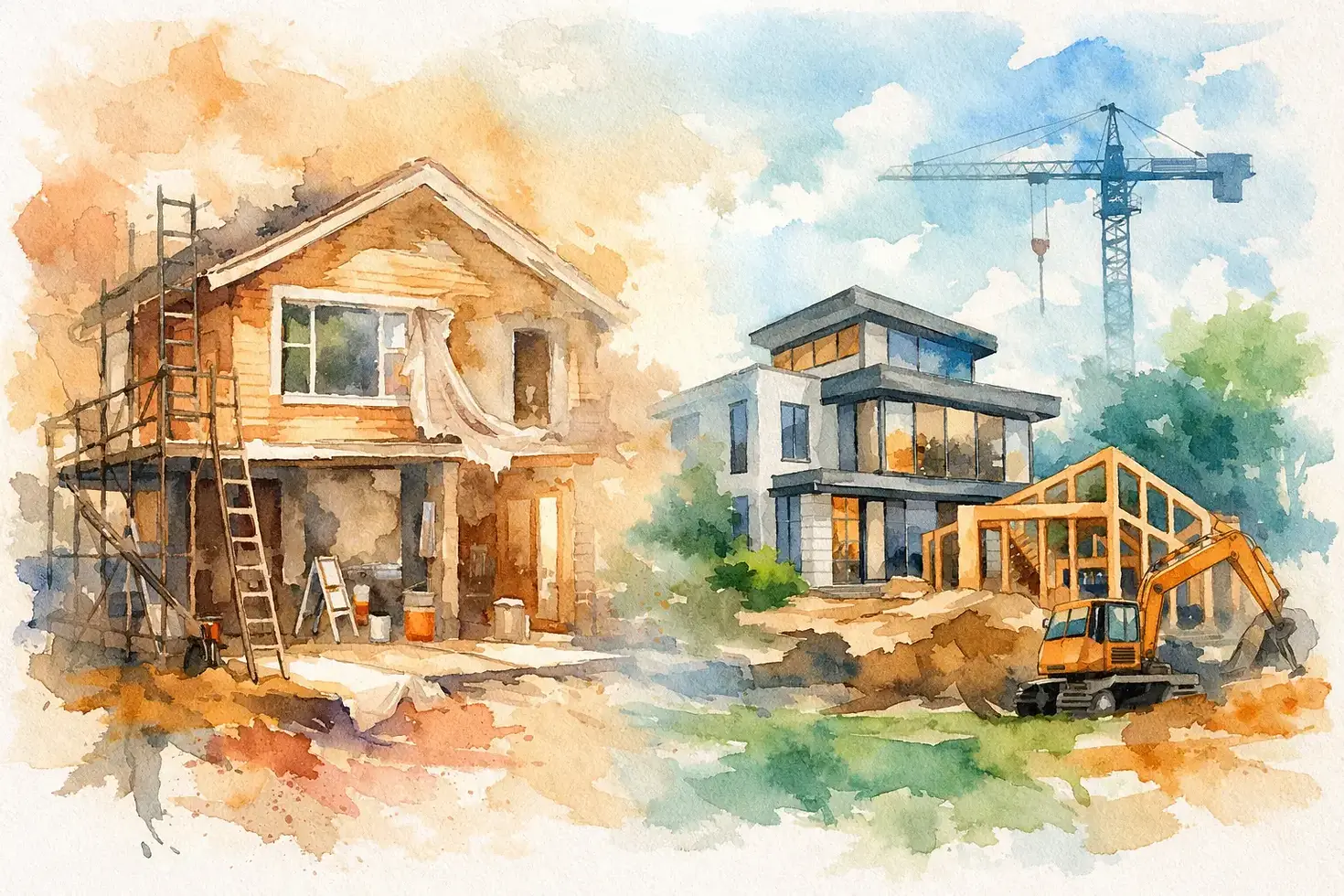
A home can have great bones, a familiar view, and years of family history - then still fall short on space, comfort, layout, or year-round performance. The choice between renovation versus new construction is not simply a matter of preserving an existing home or starting fresh. In North Idaho, it is a decision shaped by the condition of the structure, the realities of the property, your long-term plans, and how the home needs to work through snow, rain, changing seasons, and everyday life.
A well-planned renovation can make a valued home more functional without giving up its character. A custom new home can solve limitations that remodeling cannot reasonably overcome. The right path depends on what the property and existing structure can support.
Renovation Versus New Construction Starts With the Property
Before comparing floor plans, finishes, or square footage, look closely at the site. A house may be the visible part of the project, but drainage, access, grading, soil conditions, utilities, and foundation performance often determine what is practical.
On a sloped North Idaho lot, for example, adding onto an existing home may require substantial excavation, retaining, drainage work, and foundation planning. Those needs do not automatically make an addition the wrong choice. They do mean the project should be evaluated as a complete build, not as a simple room-by-room update.
New construction offers the opportunity to position the home around the land from the beginning. The building footprint can account for driveway access, snow management, sun exposure, views, drainage patterns, and usable outdoor space. This is especially valuable on raw land, irregular parcels, and properties where the best building location is not where an older structure already sits.
A renovation has a different advantage when the existing home is already well situated. If it has reliable access, sound drainage, good orientation, and a foundation in strong condition, improving the home may preserve valuable site improvements while delivering a major change in how the property functions.
When Renovation Makes Sense
Renovation is often the better investment when the home has structural integrity, a location you love, and limitations that can be addressed without forcing the entire building into compromise. Kitchen reconfigurations, basement finishing, primary suite additions, exterior updates, and improved insulation can significantly change the daily experience of an older home.
A thoughtful remodel can also retain the details that made you choose the house in the first place. Original woodwork, a familiar roofline, mature landscaping, and established neighborhood character can be difficult to recreate. For families who want more usable space but do not want to leave their property, an addition or whole-home renovation can be a practical middle ground.
The key is to distinguish cosmetic work from deeper construction work. Replacing cabinets and flooring is very different from moving load-bearing walls, correcting water intrusion, updating undersized electrical systems, or tying a new addition into an old foundation. Once walls are opened, hidden conditions can affect scope and cost.
That does not mean homeowners should avoid renovation. It means the early assessment needs to be honest. A qualified builder should evaluate framing, foundation condition, roof performance, drainage, mechanical systems, and the way a proposed addition will connect to the existing home. Good planning reduces surprises, but it should also include a reasonable contingency for conditions that cannot be confirmed until construction begins.
The benefits of improving an existing home
Renovation can allow you to stay in a preferred location, make use of existing utilities and access, and phase work when appropriate. It can be especially effective when a home needs better storage, a more open gathering area, accessible main-level living, or finished space below grade.
Basement finishing is a good example. When moisture control, insulation, ceiling height, and egress requirements are properly addressed, an unfinished basement can become valuable living space without expanding the home’s footprint. The same principle applies to a carefully designed addition that creates room for a growing family, visiting grandchildren, a home office, or a more comfortable primary suite.
When New Construction Is the Better Answer
New construction is often the stronger choice when the existing home has extensive structural issues, poor site drainage, an inefficient layout that cannot be corrected easily, or systems nearing the end of their useful life. It can also make sense when the desired result is fundamentally different from what the current house can become.
A homeowner may want higher ceilings, better separation between private and gathering spaces, a mudroom designed for North Idaho winters, larger windows facing a view, an attached shop, or a floor plan built around single-level living. Trying to force all of those goals into a small or poorly configured older home can lead to an expensive patchwork of compromises.
A custom home also gives you control over performance from the ground up. Foundation preparation, framing, insulation, window placement, ventilation, roofing, exterior materials, and snow load considerations can work together as one system. Rather than adapting new components around unknown conditions, the home can be designed for the climate, property, and way you plan to live.
For landowners, the ability to plan the build sequence is another major benefit. Site preparation can be coordinated with excavation, drainage, foundation work, utility routing, and access planning before the structure goes up. That early coordination is one reason Sandpoint Home Builders approaches custom construction with the site in mind, not as an afterthought once plans are complete.
More freedom, but more decisions
New construction provides greater design freedom, but it also requires more decisions. Homeowners will choose a building location, home size, plan configuration, exterior materials, interior finishes, lighting, plumbing fixtures, storage solutions, and many details that affect both budget and schedule.
That process is rewarding when it is guided well. Still, it is not automatically simpler than remodeling. A new home needs a realistic budget, clear priorities, and a plan that fits the land rather than merely looking good on paper.
Cost Is About Scope, Not Just Square Footage
It is tempting to assume renovation is always less expensive than new construction. Sometimes it is. But a major remodel can become costly when it involves demolition, structural changes, code upgrades, difficult access, extensive utility work, and repairs to hidden conditions.
New construction may have a higher total project cost because it includes the full structure and site development, but the scope is generally more visible at the outset. With a detailed plan and thorough site evaluation, homeowners can make decisions before construction rather than reacting to every discovery behind an existing wall.
The more useful question is not, “Which option is cheaper?” It is, “Which option gives us the right home for the investment?” If a renovation solves the most important functional issues and preserves a sound house, it may offer excellent value. If the renovation requires rebuilding most of the home while retaining a few limited elements, starting new may provide better long-term value and fewer compromises.
Budget planning should also account for the work around the home. A new driveway approach, drainage improvements, septic considerations, well connections, utility extensions, retaining, and exterior grading can materially affect either path. On rural and mountain properties, these items deserve attention early, before finish selections take over the conversation.
Timeline, Disruption, and Seasonal Planning
A renovation affects daily life differently than new construction. If you remain in the home during a remodel, there may be temporary loss of kitchen access, noise, dust, reduced privacy, and changing work areas. Some projects can be phased to limit disruption, while others are best handled with temporary housing.
New construction usually allows you to stay in your current home until the new one is ready. However, the schedule is influenced by permitting, site work, material lead times, weather, inspections, and the complexity of the design. North Idaho’s seasons make early planning especially valuable. Site preparation, concrete work, access, and drainage need to be sequenced with realistic conditions in mind.
Neither option is free from uncertainty. The goal is to choose a builder who identifies likely constraints early, communicates clearly as conditions change, and protects the quality of the work rather than rushing decisions that will remain part of the home for decades.
Questions That Clarify the Right Direction
If the decision feels close, begin with the existing home’s non-negotiables. Is the foundation sound? Does the property drain well? Can the layout support the way you want to live? Will an addition create a balanced, durable home, or simply make an already awkward structure larger?
Then consider the future. A renovation may be the right answer for homeowners who want to remain in a meaningful location and improve a fundamentally solid home. New construction may be the better fit for those building on land, planning for retirement, accommodating multigenerational living, or seeking a home shaped around a specific lifestyle from day one.
The best choice is the one that respects both the land and the life you intend to build there. Start with a candid assessment of the site and structure, set clear priorities, and let practical construction knowledge guide the vision. A home should feel personal, but it should also be prepared for the weather, terrain, and years ahead.
Comments